

Transforming everyday massive residue into high biological value raw materials, capable of preventing cognitive deterioration and promote digestive wellbeing is the great bet of the project called “Biotechnological value of molecular fractions derived from coffee grounds, through an integrated evaluation of its neuroprotector and pro-reparative in vitro potential”, led by the School of Biochemistry Engineering at the University.
This is a study whose main purpose is to assign value to a massive residue such as coffee grounds to transform it into an ingredient or raw material that is adequate for functional foods (such as yogurt, preserves or supplements) and nutraceuticals oriented towards healthy aging and prevention of cognitive deterioration.
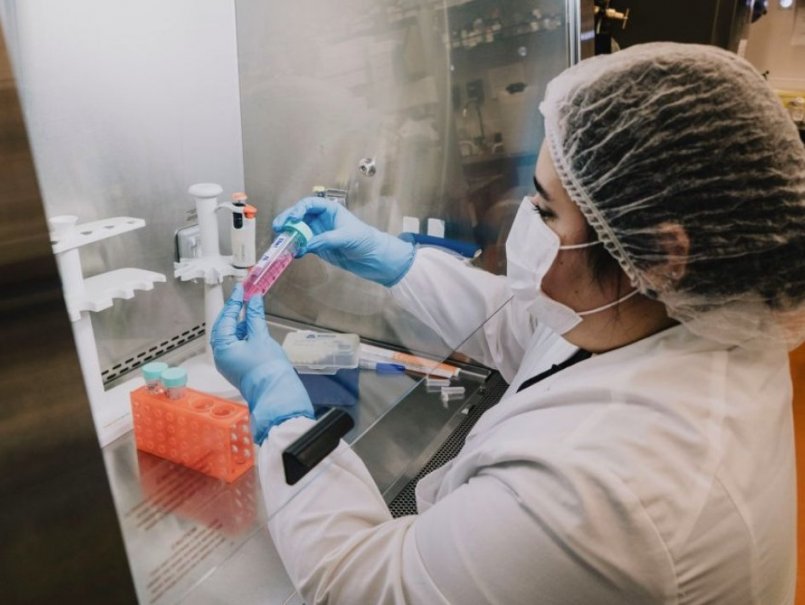
Alejandra Arancibia, post-doctoral researcher of the School of Biochemistry Engineering at the PUCV and associate researcher in this project, stated that the initiative compares two biotechnological routes for obtaining bioactives: fermentation of solid substratum - whose neuroprotector effect under cellular stress has already been validated - and the enzymatic extraction path.
“The key challenge is to decode the exact cellular mechanistics through which these extracts exert cerebral protection and determine if the enzymatic process offers a similar performance. This comparison represents a critical advantage at the industrial level, since while solid fermentation requires about 15 days, the enzymatic bioprocess is carried out in a few hours, significantly optimizing profitability and productivity for a future pilot scale”, Arancibia explained.
Intestinal Regeneration
In addition to its neuroprotective focus, the study includes a novel, exploratory milestone: evaluating the pro-repair potential for the intestinal epithelium—the membrane lining this organ—using an in vitro model of human colon cancer cells. In this model, a lesion or cellular wound is created in the epithelial layer to measure the rate of healing when exposed to coffee ground extracts.
“We hypothesize that these extracts not only possess neuroprotective and antioxidant effects but may also be pro-regenerative—that is, capable of repairing the intestinal epithelium. This is why we are exploring the incorporation of these compounds into nutraceuticals or food products: to repair intestinal damage and to determine whether they retain their neuroprotective properties upon entering the circulatory system,” the researcher explained.
The scientific, social, and environmental impact of this proposal is based on the principles of circular economy and sustainability. By adding significant value to a byproduct, one free from complex chemicals, the project addresses health challenges faced by an increasingly aging population, in alignment with the Decade of Healthy Ageing declared by the UN.
In this regard, Alejandra Arancibia noted, “The primary objective of this research is to validate a raw material that can be scaled, through competitive grant funding, for use in the nutraceutical and biotherapeutic sectors; a pathway that, under Chilean law, is more accessible than the pharmaceutical industry. This raw material can easily be incorporated into capsules or food matrices. Just as we currently see yogurts or gummies enriched with protein, we envision functional foods, such as fruit preserves or yogurts, designed for older adults or for preventive consumption, offering dual protection: digestive and neuroprotective.”
International Perspective
The project, awarded through the 2026 Interdisciplinary Associative Research Competition (DI) funded by the Pontificia Universidad Católica de Valparaíso (PUCV), involves international collaborators Juliana Castro (ICESI University) and Oscar Vega (University of Antioquia), both from Colombia. It also establishes a partnership with the Chilean company ABIO SpA and integrates the work of the School of Biochemical Engineering and the School of Food Science at the PUCV, together with the CREAS center, located on the university’s Curauma Campus.
Regarding the support received, Arancibia noted: “Thanks to the resources provided by the University to fund studies like this one, we are able to ensure the continuity of our projects and develop new lines of research. It provides us with the ability to keep investigating and collaborating in ways that address the needs of society.”
Through initiatives such as this, the PUCV reasserts its commitment to generating interdisciplinary knowledge that addresses challenges within the region and the country, ultimately leading to tangible improvements in people’s lives.
By Erika Schubert
Strategic Communications Department